The Science of Keyboard Acoustics: Foam, Tape, and Plate Physics
How internal air gaps, resonance dampeners, and material flex coefficients transform high-frequency switch chatter into deep, satisfying typing profiles.
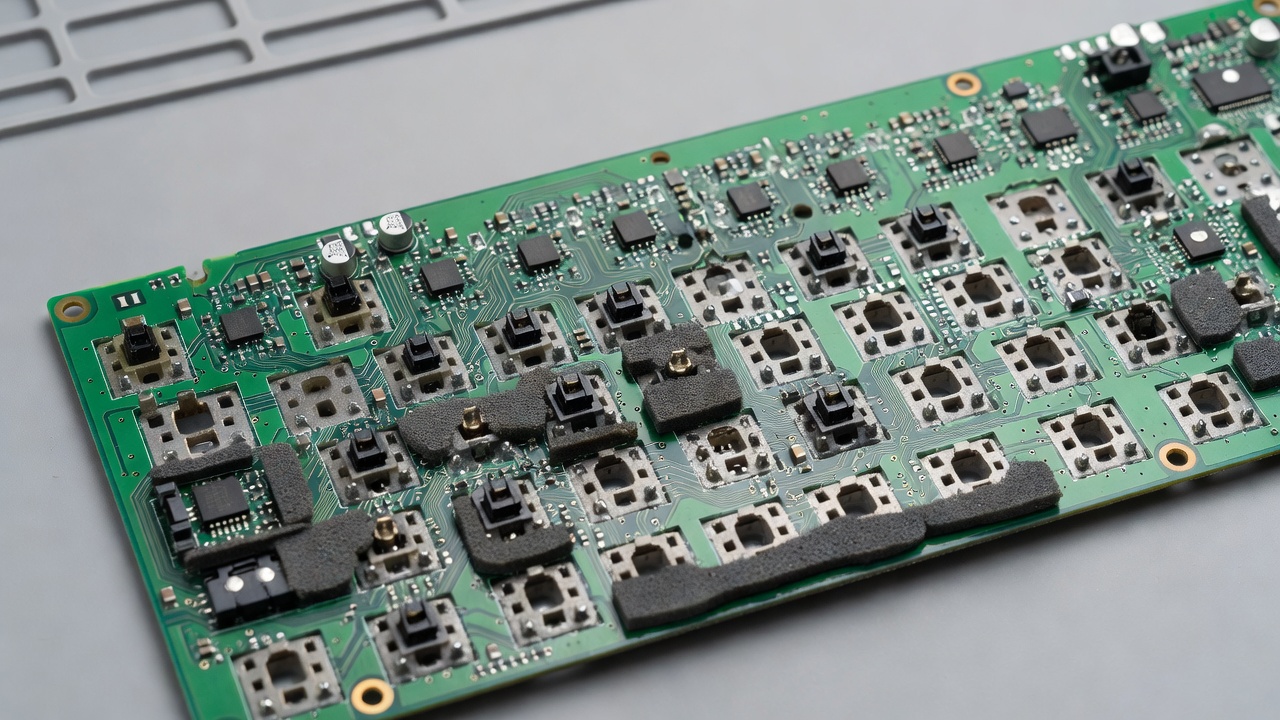
When custom keyboard enthusiasts debate the difference between a high-pitched "clack" and a deep "thock," they are ultimately discussing structural acoustics and acoustic resonance attenuation. The enclosure of a mechanical keyboard acts as a miniature acoustic chamber. Every time a stem strikes the bottom of a switch housing, kinetic energy converts into sound waves that bounce off the PCB, case walls, and desk mat.
1. Plate Materials and Mechanical Elasticity
The mounting plate holds your switches in position above the printed circuit board. Its mass, stiffness, and resonant frequency dictate how bottom-out force reverberates through the chassis.
Brass Plates
Brass is dense and rigid. It creates a higher pitched, sharp sound signature upon bottoming out, while providing an exceptionally firm typing feel with almost zero flex under finger pressure.
FR4 and Carbon Fiber
FR4 (the woven fiberglass material used in PCBs) strikes an optimal middle ground. It absorbs high-frequency pinging while maintaining a comfortable, moderate flex during aggressive typing sessions.
PC (Polycarbonate) and POM
Polycarbonate offers maximum flex and acoustic dampening. It lowers the fundamental pitch of switch impact, yielding the deep, warm acoustic profile sought after in premium custom builds.
2. The Tempest Tape Mod (Masking Tape Technique)
Originating in the custom keyboard community, applying 2 to 3 layers of non-conductive painter's masking tape directly to the back of the PCB acts as a high-pass frequency filter. The tape layer reflects higher frequencies back toward the top plate while letting deep, low-frequency sound pass through, giving switches a distinctly pops-and-thocks sound profile.
3. Case Dampening: Poron vs Silicone vs EVA
Eliminating hollow air pockets inside the aluminum or polycarbonate bottom case prevents internal echo. Poron memory foam is prized for its open-cell structure which traps sound energy without creating pressure on delicate micro-solder points on the PCB bottom.